
The history of immigrant detention & deportation in CA

Immigration control & crime and punishment are inexorably woven into the social fabric of CA history. By the 1890’s, the Native populations had been decimated by way of cultural genocide, Mexican dispossession of CA was complete, and Anglo-American settler occupation was in full bloom. Infused by Manifest Destiny, these settlers believed the bounties and resources of CA belonged exclusively to them and their families. The post Gold Rush era set in motion an explosive xenophobic movement that targeted Chinese extinction and forever altered the carceral landscape of CA. Through the lens of immigration we can better understand the foundation of incarceration as a tool for social control in CA society in ways that look shockingly familiar to the features we observe today.

As the California indigenous populations declined, Chinese immigrants rapidly became the largest nonwhite population in CA. Chinese immigration was immediately perceived as a threat to the fantasy of Manifest Destiny by Western settlers. Anglo-American settlers asserted political dominance over CA society by passing anti-Chinese legislative acts that consolidated Anglo-American power. During the Gold Rush, the Foreign Miners Tax charged non-citizens a hefty fee to mine. CA also denied Chinese immigrants the right to vote and banned them from testifying against whites or sitting on juries. Settler law allowed whites to assault, kidnap, or even murdered Chinese immigrants without legal consequence. This reign of terror culminated in the 1871 Chinese massacre in Los Angeles in which 500 whites mobbed Chinese neighborhoods, setting fire to homes & businesses, before torturing and lynching 17-20 Chinese immigrants. This event was the largest ever mass lynching in American history.
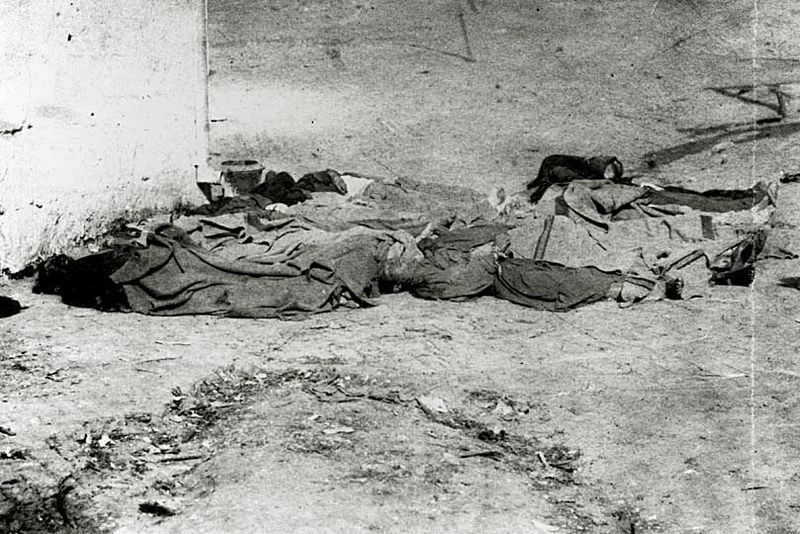
massacre

Despite oppressive conditions in which Chinese immigrants faced wanton theft and violence at the hands of whites, they continued to arrive each year by the thousands. In response, the Geary Act of 1892 transformed Western hopes of expelling Chinese immigrants into a formal legislative proposal that aimed to ‘absolutely prohibit the coming of Chinese persons into the United States’. The Geary Act required all Chinese laborers to apply for a certificate of residence, but they could only secure this certificate on the testimony of a credible white witness who could confirm they arrived prior to 1882. Any Chinese immigrant who failed to comply with the Geary Act was subject to imprisonment at hard labor for a year and/or immediate deportation. This new law marked a sweeping expansion of immigration control and married immigration to crime and punishment in a historically unprecedented and constitutionally dubious fashion.

In May of 1893 the Supreme Court held an emergency session to hear its very first deportation case under the Geary Act. Fong Yue Ting v. United States rested on the central issue of implementing a criminal punishment — deportation — without due process of the law. The Supreme Court unequivocally deferred to Congress’s plenary power over matters of immigrant expulsion and concluded no authority to intervene. Further, the Court decided that deportation was not a criminal sanction, which would trigger constitutional protections, but, rather, an administrative process not subject to due process protections. In other words, deportation was found not to be imprisonment in a legal sense. That’s insane, folks. Deportation is, by definition, punishment. It involves an arrest, deprival of liberty, removal from one’s family, home, and community, and being sent away to a distant land. This case still stands as good law today and has shaped the contours of immigration law for over a century.

Since 1896, federal authorities have conducted over 50 million deportations and forced removals from the United States. According to the Fong Yue Ting ruling, none of the millions of deportees were imprisoned as a punishment for crime. Immigrant detention has emerged as one of the most dynamic sectors of human caging. So many immigrants clog correctional facilities in CA that private corporations like Geo Group have contracts to hold detainees in facilities throughout CA.

CA is home to more undocumented immigrants than any other state. Some observers may wonder why so many immigrants, including children and families, are caged in jails and detention centers. Others may wonder why more cages aren’t being built. Few may understand that a settler law from 1892 built the structure of immigration control we live in today. Deportation no longer explicitly target Chinese immigrants, but the regime of immigration control is no less racialized. The criminal justice system, or in this case the domain of civil law, has long been used as a vehicle to perpetuate a caste based society in CA. This blogger happens to believe that no human beings are ‘illegal’.


Who deserves second chances?

It’s common to hear rhetoric about second chances in conversations about criminal justice and prison reform. But there’s a social distance between those who need second chances and those who don’t that complicates this calculus. The regular Joe’s in society who don’t break the law may feel a natural disapprobation for the criminal Joe’s who deviate from law abiding behavior. Further, there seems to be an additional hurdle to the discussion of second chances that manifests in the types of offenses that may qualify or disqualify an individual from a fresh start. CA & America would still be the global leaders in human caging even if we were to immediately release all the non-violent/drug offenders in our prisons. Any conversation about second chances therefore must begin with the more difficult position of reckoning with the destiny of violent offenders.

Former President Barack Obama proclaimed America a “Nation of second chances.” This is a pleasant thought, but digging deeper into this sentiment brings about some unsettling conclusions. The premise that America is built on second chances begs the questions of why is there such a widespread need for second chances in the first place? If there weren’t such drastic inequalities in society there wouldn’t be such an urgent need to build upon this rationale of second chances. If everyone were on the same playing field right off the bat instead of, say, a social system in which upward mobility and autonomy in life is dependent on one’s zip code, the landscape of second chances would look quite different.

Operating within the existing social realities unlocks different quandaries to ponder. Life in the ghetto presents an exceptional amount of barriers that it could be said individuals in these communities never even had a first chance in life. This simple truth is magnified by the defining hallmark of this era of mass incarceration — minority over representation. Brown and black bodies fill CA prisons at astonishingly disproportionate rates. Mass incarceration (aka mass extermination) is the legacy of slavery, plain and simple. Any discussion of second chances that glosses over this point is miscalibrated.

Perhaps even more common than hearing about second chances is the idea that our criminal justice system is broken. It is not broken, it is functioning just as it was designed to. Rounding up young bodies from oppressed communities and relegating them to a life that positions them even further on the fringes of society has been the M.O. of the criminal justice system since inception in CA. The more radical these ideas sound serves as a litmus test for one’s understanding of the historical role prisons have played in CA society. While it’s no longer acceptable to explicitly use the criminal justice system as a vehicle to perpetuate a caste-based society, this enduring mission persists. The definitions have evolved (violent offenders being the new term of choice), but the same tactics are still recycled. Round up young bodies, brand them with the mark of the criminal justice system, and confine their life arches.

Distinguishing structural injustices from self-inflicted harms is the ultimate intersection of this notion of second chances. For those who succumb to the ensnaring nature of the ‘hood, should they be granted clemency after serving a considerable amount of their sentence as a recognition of the conditions that initially lead them to lawless behavior? Or, do those of us who’ve never needed a second chance urge our criminal justice system to continue to throw the book at these offenders to set an example? Sentencing guidelines aren’t conceptualized with the idea of second chances in mind, so if they are to be changed, second chances as a form of reparations must move to the forefront of reform-based conversations.

To further complicate this delicate balancing act, let’s consider the different types of offenders that may or may not deserve second chances. Perhaps more so than any other group of offenders, sexual offenders assault our moral sense of wrongdoing. But, rather shockingly, this group has repeatedly been demonstrated to have the lowest recidivism rate across the board. If we believe that those who are the least likely to re-offend deserve second chances the most, empirical data leads us to the conclusion that these type of offenders are most deserving of second chances. This position is difficult to defend, but offers a perplexing glimpse into the amorphous nature of second chances.

Integrating holistic approaches to better understand the factors that led individuals to break the law offers an intriguing potential to humanize the criminal justice system. To flesh this concept out, let’s consider a few different scenarios. Bobby has a history of petty shoplifting charges. Upon his most recent arrest, the judge adjudicates Bobby to a minor jail stint. On the surface, this standard story doesn’t seem to cause any issues for society. Bobby has repeatedly committed the same crime, received a proportional sentence, and now will hopefully have time to reflect on his mistakes in a correctional facility. But what if Bobby is stealing food from his local grocery store because his family is food insecure and his little sister is starving? Most observers would most likely follow Bobby’s actions, and wouldn’t have any moral issues with the thefts. Yes, stealing is against the law, but in the face of watching your little sister suffer from starvation, the theft pales in comparison. Or, consider the story of Willy. Willy sells bootleg copies of movies in his neighborhood, but he doesn’t know that copyright infringement is a crime. Ignorance of the law is not a successful legal argument in the courtroom, but should Willy still receive a criminal sentence for his non-violent actions?

The obvious challenge to this holistic approach to considering second chances is volume. There are simply far too many cases to break down each one to a human level and consider all the relevant factors at play. The dark horse in these conversations about second chances is the role prosecutors play. Prosecutors are elected officials who seldom run on a platform of leniency and compassion. Less than 10% of criminal cases go to trial, a full 90% conclude in the plea bargaining stage. There is virtually no publicly accessible information about prosecutorial behavior, but again the issue of volume plays a significant role in guiding their actions. If a prosecutor has a dozen different cases to get through on any given day, there is not enough time to sit down and get to know the suspect on a human level to understand their criminal behavior. When we consider the role racial tropes play in criminal proceedings, it’s fair to assume when a prosecutor sees another brown or black suspect, their biases (implicit or explicit) becoming a driving force.

We’ve yet to examine the current second chance climate that recently released inmates face. The post-release environment in CA is replete with over 40,000 legal discriminatory barriers. From voting restrictions, to housing discrimination, to withholding educational grants, life on the outside for convicted felons is nearly impossible to navigate. One mistake can alter the trajectory of someone’s life until the grave. The Kantian retributivist may be satisfied with this dynamic, but who among us hasn’t committed a crime at some point in our lives? Maybe it was something minor like jaywalking or rolling through a stop sign, or more substantial like property infractions or instances of physical violence. The only difference between us citizens on the outside and our fellow incarcerated Californians is that we didn’t get caught. Or, for those of us who enjoy certain privileges in life, the only difference is that we didn’t have to break the law to meet our basic needs in life — or, if we did break the law, we were immediately granted a second chance and not formally charged.

Second chances … well, what about first chances?

An example of CDCR’s corrosive institutional culture

A CA prison psychologist has recently filed a lawsuit against CDCR that is quite damning. The psychologist alleges a strong backlash to her attempts to report mistreatment of gay and transgender inmates at a correction facility in Vacaville. On two separate occasions, she was locked in a confined area with known rapists by correction officers as a retaliation for her whistle-blowing. She goes on to cite further examples of guards assaulting gay and transgender inmates, and encouraging other inmates to do the same. On one occasion, prison guards even directed inmates to assault her in order to ‘remind her where she’s at’.

This horrifying tale is a small glimpse into prison culture. While it could be said that San Quentin is among the most progressive prisons in America, the same distinction cannot be bestowed upon other CA prisons. In the pantheon of injustices stemming from the cancer that is mass incarceration, this blogger has thus far failed to examine the role prison guards play. It’s difficult to find reliable data of any kind about prison guards beyond releases from CDCR. Needless to say, CDCR is in no hurry to reveal potential abuses by guards. It’s fair to assume that most guards aren’t sadistic psychopaths, but there are certainly ‘bad apples’ who turn a blind eye to injustices, or worse, are the catalysts of such abuses. The lawsuit shines an inquisitive light on the animosity from prison guards towards incarcerated LGBT-identifying inmates. Sadly, given the proliferation of such attitudes in mainstream society, it’s not hard to believe.

The corrections officers’ labor union is known as the “CA Correctional Peace Officers Association” — CCPOA. (Try not to scoff at the notion of prison guards as ‘peace officers’.) Semantics aside, CCPOA is a very powerful union that has been exerting influence over Sacramento since the 1950’s. CCPOA has a tenth of the membership that the CA Teachers Association does, but their political activity routinely exceeds that of other unions. CCPOA has several political committees that function as lobbying tentacles to help pass favorable legislation. For example,  CCPOA is in favor of tougher sentences (for reasons of self-preservation). In fact, CCPOA was one of the top donors to the Three Strikes Proposition in 1994. The battle for criminal justice and prison reform in CA has strong grass root efforts, but as long as CCPOA continues to wield disproportionate influence in Sacramento, reformers must bear a Sisyphus-like mentality.

Reframing how we think/talk about criminal justice & prison reform

Attention to mass incarceration and criminal (in)justices has increased greatly in recent years. Criminal justice and prison reform movements are gaining currency across the political spectrum, but there remains a problematic dichotomy among violent vs. non-violent offenders in determining who deserves the benefit of such reform efforts. This is a mistake for several reasons. By focusing on the low-hanging fruit of non-violent offenders, we reify the incorrect meta-narrative that the War on Drugs is to blame for this era of hyper incarceration. The majority of people in CA & American prisons are not locked up for drug possession or drug dealing. Figures vary, but safe estimates conclude that less than 17% of offenders in state prisons are incarcerated on drug charges.

For those who seek to transcend the superficial tides of understanding that beseech narratives about mass incarceration, it’s strikingly obvious that reducing prison populations means releasing a whole lot of violent offenders. But here is where our conceptualizations about prison reform fail us. The vocabulary we use to discuss violent offenders is so impoverished that it fails to adequately convey the types of behaviors that lead to incarceration. When one hears the term ‘violent offender’ it immediately conjures visceral fears of murder, rape, and other heinous acts. But the nature of violent offenses differs between states (and counties) so broadly that most would be quite surprised to learn the charges that classify as violent offenses. In Washington, D.C., yelling at a police officer is a violent offense. Until Prop 47 in CA, robbing an empty house was considered a violent act. This characterization of violent offenders goes beyond rhetoric, it’s reflected in policy.

By using the term ‘violence’ imprecisely, it’s easier to relegate criminals to the fringes of society for the rest of their lives. For example, let’s say a drug addict shares some of his heroin with a friend. The friend accidentally overdoses and dies. Is the addict a murderer or a non-violent offender? Or let’s say a group of three young men decide to burglarize an empty home. Two go in, while one stays outside as a get away driver. Unbeknownst to them, the home is not empty and the two men fatally shoot the resident. Is the get away driver a violent criminal in this dynamic?

Some of the most urgent questions we can ask about violent offenders are more aligned with philosophy than policy. Is violence a permanent and immutable human condition? Is violence only physical? How much does intention matter? Is violence more violent if one wears a certain color of clothing or is friends with certain people? If one is a certain race? Do violent offenders deserve second chances? Or, do they deserve to be condemned forever wasting away in cages?

These questions may strike observers as abstract, but it’s a luxury to not spend time pondering them. It can be virtually impossible for someone with a violent offense on their record to rebuild their life, granted they even get released from prison. How long should they have to pay?

They call us monsters

Curious about what CA’s juvenile justice system looks like in action? Look no further than They call us monsters, a new documentary that is available on Netflix and other streaming platforms. The film follows three adolescent boys as they cope with their current incarceration and hope for second chances. The young men begin to write a screenplay with an outside filmmaker that slowly reveals the traumas they’ve been through & how they’ve normalized profound live events. The stories that brought them to juvenile detention are familiar – poverty, drugs, gangs – but their ability to retain the essence of their carefree spirits in the face of lengthy prison sentences is anything but familiar to viewers. The boys laugh and joke constantly, even while disclosing the life altering dynamics that led them to their incarceration. It becomes increasingly difficult to reckon with their violent crimes as we get to know them and see them as brothers, friends, and not so unlike other teenagers we may know. This remarkable documentary leaves one floored and is a well-needed exercise in empathy and solidarity.

The United States is the only country that sentences juveniles to life in prison without the possibility of parole. In recent years, CA’s Juvenile Justice system has been the site of a robust reform movement. Senate Bill 260, passed by the CA legislature in 2014, allows juvenile offenders tried as adults for their crimes the possibility of parole after 15 years of incarceration. SB 260 still holds individuals responsible for their actions, but recognizes the urgent need to distinguish adolescents with still-forming brains from adults (over 7,000 CA prisoners were under the age of 18 at the time of their crime). It’s not inflammatory to claim SB 260 tremendously altered the landscape of both the juvenile and adult justice systems. Prop 57, passed by CA voters in November 2016, is most commonly know for its provision of expanding credits to incentivize early releases through the completion of educational milestones, but tucked in the language of Prop 57 was a significant change to the modus operandi of Juvenile Courts. Since the inception of Juvenile Courts, judges held the most authority in dictating the legal fate of young offenders.  But in response to growing social fears of young super predators in the late twentieth century, charging authority was transferred to prosecutors. This realignment took power from the diversionary minded judges into the hands of interventionist minded prosecutors. This move punctuated the mission of juvenile justice and was responsible for the explosion of juvenile offenders being charged and sentenced as adults. Prop 57 restored the power of the judges, and will hopefully mitigate the proliferation of juveniles tried as adults.

Juvenile Courts could be said to be one the greatest legal exports in history. First established in the US in the early 20th century, juvenile courts have since spread to almost every country in the world. The ethos of juvenile jurisdictions in treating youngsters differently than adults is precisely because they are different. Kids do dumb stuff and make mistakes, but deserve second chances because, well, they are kids. Rehabilitation & diversion is more of a focus in juvenile correctional settings, instead of, say, a force of unrelenting and inhumane incapacitation that we see at play in the criminal justice system.

Professor Franklin Zimring at UC Berkeley is perhaps the world’s leading author on juvenile justice (among other criminological topics). To inculcate a deeper understanding of the legacy of juvenile justice reference his literature:

American Juvenile Justice

– An American Travesty

– A Century of Juvenile Justice

– One More Chance: The Pursuit of Promising Intervention Strategies for Chronic Juvenile Offenders